DIY Fabric Scrap Christmas Ornaments: A Simple No-Sew Guide
Turn a bag of fabric offcuts into folded, glued Christmas ornaments — no machine, no pattern, no sewing...

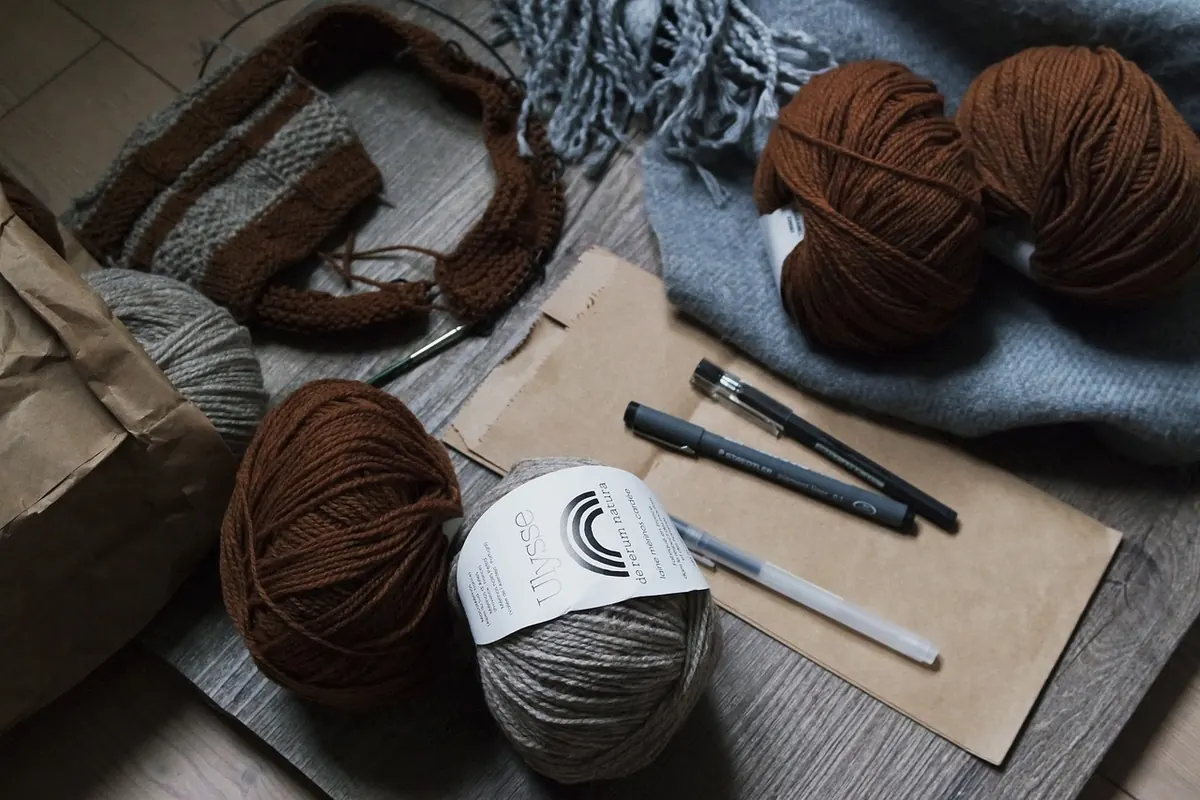
A scarf is one of the kindest things you can knit for someone. It doesn't need a perfect fit, it works in almost any colour, and it gets worn right against the skin — which is exactly why the yarn matters so much. Choose well and your gift becomes the thing they reach for every morning from November to March. Choose badly and it lives in a drawer, quietly scratchy and slightly too heavy.
The good news is that this isn't a matter of luck or expensive taste. A handful of questions, asked in the right order, will narrow the shelves quickly. Here's the checklist I run through before buying yarn for a gift scarf.
Before you look at a single skein, picture the person actually wearing the scarf. Do they run warm or cold? Do they wear wool against their neck without complaint, or do they reach for cotton and silk? Do they dress in soft neutrals, or is their coat the brightest thing on the street?
Two examples make this concrete. A friend who wears a slim black coat and hates bulk will get far more use from a light fingering-weight scarf in charcoal — long, drapey, tucked inside the collar — than from a chunky cabled number that swallows her shoulders. Her father-in-law, who walks a dog at seven in the morning in February, wants the opposite: a dense worsted-weight scarf knit at a firm gauge so the wind doesn't push through it. Same craft, completely different yarn.
Also think about how the scarf will be worn. A snug cowl for commuting needs less yardage and a yarn that holds its shape. A long wrapping scarf for someone who likes to loop it twice needs more drape and more yarn. If the scarf is decorative — thrown over a jacket at a dinner — you can afford something softer and less hardwearing. If it's for shovelling snow, durability comes first.
Wool remains the best default for cold-weather scarves: warm, elastic, and forgiving of the way a scarf is pulled and stretched. Merino is the softest everyday choice, though it pills faster than coarser breeds. Bluefaced Leicester sits in a lovely middle ground — soft enough for most necks, sturdy enough to survive a winter of daily wear.
Alpaca is warmer than wool for its weight and has wonderful drape, but it's floppy. It makes a gorgeous loose, cosy scarf and a frustrating structured one. Cotton and linen suit spring gifts or recipients who can't wear animal fibres, but they're heavier and less elastic, so plan a looser gauge and a shorter scarf. Silk adds shine and drape in small proportions.
Softness in the skein and softness in the finished fabric are two different things, and the neck is an unforgiving judge. Rub the yarn against the inside of your wrist first, then against your neck if the shop allows it. Ask yourself whether you'd wear it there for an hour.
Then knit a swatch. A swatch tells you what the ball band can't: whether the yarn blooms into softness after blocking, whether it feels denser at the gauge you actually want, and whether it splits while you work. Some wools are slightly crisp in the skein and soften beautifully after a wash; some yarns that feel like a cloud in the shop turn limp and fuzzy once knit.
Remember that stitch pattern changes the texture too. Stockinette shows every unevenness, garter softens everything, and cables create raised ridges that press into a collar. If you're knitting a heavily textured scarf, choose a smooth, round yarn that lets the stitches speak.
A scarf takes more punishment than almost anything else you'll knit. It's pulled on and off, stuffed into bags, rubbed against coat collars, and washed more often than a sweater. Two yarns of the same fiber can wear very differently depending on how they're spun.
Look for a plied yarn, where two or more strands are twisted together, and a reasonably firm twist. Loosely spun singles fuzz and pill quickly, especially where the scarf rubs at the neck. High-twist yarns resist abrasion and hold cable and lace patterns cleanly. Halo yarns — mohair blends, soft alpaca — look beautiful but blur textured stitches and rub into a fuzzy halo within a season.
If you're knitting for someone hard on their accessories, a blend with a little nylon or a sturdy wool/nylon sock-type yarn is a practical choice, even for a scarf. It's not traditional, but it will survive a washing machine and a decade of coat hooks.
Be honest about who is receiving this scarf. Most people outside the knitting world will put a scarf in the washing machine eventually, often on a warm cycle, sometimes with a towel. Non-superwash wool felts under those conditions and a beautiful gift becomes a small, dense mat.
If you wouldn't trust the recipient's washing machine, don't trust the yarn to survive it.
Superwash wool, most acrylics, and many blends can handle a gentle machine wash, though you should still check the ball band and knit a swatch to test. If you fall in love with a hand-wash-only yarn — and sometimes you should — plan to include a small care card with the gift, written in plain language: cool water, wool wash, no wringing, dry flat. People follow instructions that come with a present, especially when they're short and specific.
For gifts that cross borders or sit in storage, also consider moths. Wash the finished scarf before wrapping it, and mention storage in the care note.
Scarves use more yarn than people expect. A worsted-weight scarf in a simple stitch often lands somewhere between 400 and 500 yards, and cable patterns, wide scarves and long wrapping styles use considerably more. Laceweight can take double that. Check the pattern's yardage requirement, then buy enough in one dye lot — and buy one skein extra if you can.
That extra skein is not waste. It covers a gauge surprise, a knot in the ball, or a scarf that ends up longer than planned, and leftover yarn makes a matching hat or a repair kit for later. If budget is tight, spend on the yarn that touches the skin and keep the pattern simple; a plain garter scarf in a good soft wool looks far more considered than a complicated stitch in a cheap, scratchy one.
Seven questions, five minutes in the shop. Get them right and the scarf does the rest — worn soft at the neck, washed without drama, and still in use long after the winter it was given.
Photo: StockSnap / Pixabay
Turn a bag of fabric offcuts into folded, glued Christmas ornaments — no machine, no pattern, no sewing...
A practical, season-by-season checklist for local craft fairs, covering how much to make, what to pack,...
Tension problems show up as tight chains, aching hands, and wobbly rows. Learn five common crochet tension...